
Laser Welding Is Here: Handheld Laser Welding for Fabrication Shops
September 28, 2026 -
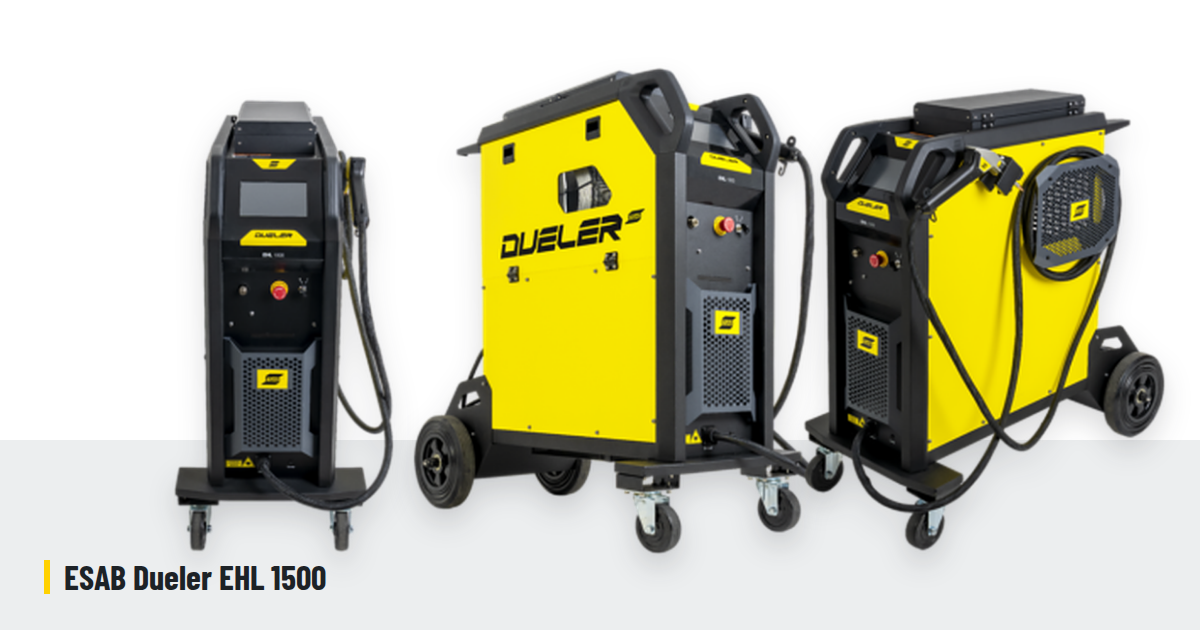
There’s a new way to weld in Australian workshops, and it fits in one hand.
Handheld laser welding for fabrication shops has moved out of robotic cells and onto the shop floor. We now stock the ESAB Dueler EHL 1500, a portable 1500 W unit built for stainless, aluminium, and mild steel fabrication.
So what’s the big deal?.
What’s New: Handheld Laser Welding Has Arrived
Quick answer: Handheld laser welding brings laser technology out of automated cells and into a welder’s hand. It uses a focused beam instead of an arc, and portable units like the 1500 W air-cooled ESAB Dueler EHL 1500 now put it within reach of everyday fabrication shops.
For years, laser welding meant robots, fixtures and a big capital spend. A handheld unit changes that. Your welder holds the torch and runs the seam much like TIG, but the heat comes from a tightly focused laser beam.
How it works
- The beam: a fibre cable carries the laser to the torch, and the beam melts a narrow line of metal at the joint.
- Shielding gas: protects the weld pool as it solidifies.
- Filler: none needed on tight joints, or wire-fed filler for fillets and small gaps.
So What? Why It Matters for Your Shop
Quick answer: Laser welding matters because it puts less heat into the job. Thin stainless, aluminium and mild steel stay flatter, seams come off narrower with less heat tint, and the hours usually lost to straightening, grinding and pickling start coming back to the shop.
Think about the last job that fought you. Thirty stainless benchtops in 1.5 mm 304, every seam bowed and tinted. The welding was done by lunch, and the cleanup ate the rest of the week.
That cleanup is where laser welding earns its keep.
- Flatter panels: less heat input means less distortion and less time on the straightening table.
- Cleaner seams: narrower welds with less heat tint cut grinding, polishing and pickling.
- Faster travel: speed gains of up to four times TIG are often quoted on thin, well-fitted stainless.
- Familiar handling: welders with TIG experience usually settle into the torch once parameters are dialled in.
The four-times figure is a ceiling, not a promise. Fit-up, thickness and joint type decide what your shop actually gets, so run a trial on offcuts of your own work.
Is It Right for Every Job? Laser vs TIG
Quick answer: On thin, well-fitted stainless and aluminium, handheld laser welding outruns TIG and puts less heat into the job. Speed gains of up to four times TIG are often quoted, but your fit-up, material thickness and joint type decide what your shop actually gets.
Where laser welding fits
- Stainless benchtops, enclosures, food and beverage equipment, and architectural work.
- Aluminium sheet that buckles under heat.
- Long straight seams on sheet and box sections.
Where TIG still holds the line
- Rough fit-up: laser welding wants tight, consistent gaps. Wire feed helps, but it won’t rescue badly cut parts.
- Heavier sections: anything beyond the unit’s rated penetration.
- Procedure-controlled work: jobs welded to a qualified procedure, for example under AS/NZS 1554, need a laser procedure qualified before you switch.
Meet the Machine: ESAB Dueler EHL 1500
Quick answer: The ESAB Dueler EHL 1500 is a portable handheld laser welder with a 1500 W air-cooled source and built-in wire feeder. ESAB rates it for stainless, carbon steel and aluminium, with up to 6.5 mm penetration and low distortion for workshop fabrication.
ESAB’s published specifications:
- 1500 W air-cooled laser source: no water chiller to fill, drain or maintain.
- Up to 6.5 mm penetration with low distortion.
- Integrated wire feeder that handles multiple wire diameters.
- 7-inch TFT screen for setting parameters, from fine seams to deeper welds.
- Materials: stainless steel, carbon steel and aluminium.
Check before you buy
- Your usual material thickness against the 6.5 mm rated penetration.
- Cut quality and fit-up coming off your saw, shear or laser cutter.
- The ambient temperature and duty information in ESAB’s manual, especially if your shed cooks in a Queensland summer.
- Floor space for a screened laser welding area.
Setting Up a Safe Laser Welding Area
Quick answer: A 1500 W handheld laser welder is a Class 4 laser. Weld inside a screened, restricted area, issue laser safety eyewear rated for the unit, remove reflective surfaces from the beam path, run fume extraction, and follow the AS/NZS IEC 60825 series and the manufacturer’s manual.
A laser brings a different hazard from an arc. The beam and its reflections can injure eyes and skin well beyond the weld zone, and stainless and aluminium both reflect.
- Controlled area: screened bay, restricted entry and warning signs whenever the laser is armed.
- Eye protection: laser safety eyewear or helmet filters rated for the unit’s wavelength and power. A standard arc lens is not enough on its own.
- Reflective surfaces: cover or remove polished stainless, aluminium and tooling near the beam path.
- Fume: laser welding still makes metal fume, especially on stainless. Capture it at the source with welding fume extractors.
- Training: only trained operators arm the unit, with the controls written into your safe work method statement.
Handheld Laser Welding: What Fabricators Ask Us
How thick can a 1500 W handheld laser welder weld?
It depends on the machine, material and joint. ESAB rates its 1500 W Dueler EHL 1500 for up to 6.5 mm penetration. Test on offcuts of your own material before quoting work.
Does handheld laser welding need shielding gas?
Yes. Shielding gas is delivered through the torch to protect the weld pool. Use the gas type and flow rate in the manufacturer’s manual for each material.
Can a handheld laser welder weld aluminium?
Yes. ESAB rates the Dueler EHL 1500 for aluminium as well as stainless and carbon steel. Aluminium is reflective, so screening and laser-rated eye protection matter even more.
What safety gear do I need for handheld laser welding?
You need laser safety eyewear or helmet filters rated for the unit’s wavelength and power. Add a screened, restricted welding area, fume extraction and trained operators. A standard arc welding lens on its own is not enough.
Will laser welding replace TIG?
Not completely. Laser welding is faster with less distortion on thin, well-fitted joints. TIG still suits rough fit-up, heavier sections and work tied to a qualified TIG procedure.
Bring Laser Welding Into Your Shop
Want to see what the ESAB Dueler EHL 1500 handheld laser welder can do on your jobs? Check out the full product page, or talk to our team at Hemmant about your materials, joint types and production volume. We’ll help you work out whether laser welding is the right next step for your shop.
Have inquiries?
Give us a call on 1300 828 764 or complete the form