
 Products
Personnel Protective Equipment
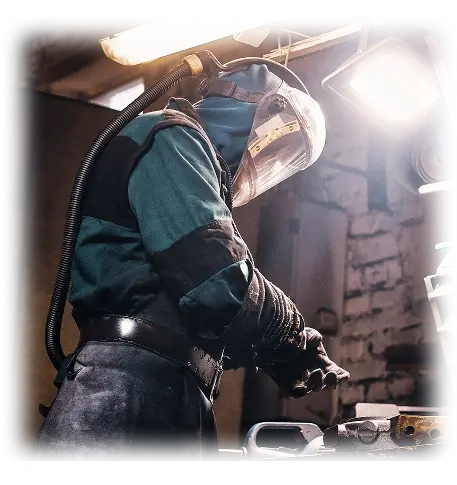
If PPE is to be used at the workplace, as the person conducting the business or undertaking (PCBU), you must ensure the equipment is:
− selected to minimise risk to health and safety, including by ensuring that the equipment is suitable for the nature of the work and any hazard associated with the work, and is of suitable size and fit and reasonably comfortable for the worker who is to use or wear it
− maintained, repaired and replaced so that it continues to minimise risk to the worker who uses it, including by ensuring that the equipment is clean and hygienic, and in good working order.
If you direct the carrying out of work, you must provide the worker with information, training and instruction in the proper use and wearing of PPE, and the storage and maintenance of PPE.
A worker must, so far as reasonably able, use or wear the PPE in accordance with any information, training or reasonable instruction and must not intentionally misuse or damage the equipment.
In most cases PPE must be worn by workers when welding to supplement higher levels of controls such as ventilation systems or administrative controls (see Figure 3).
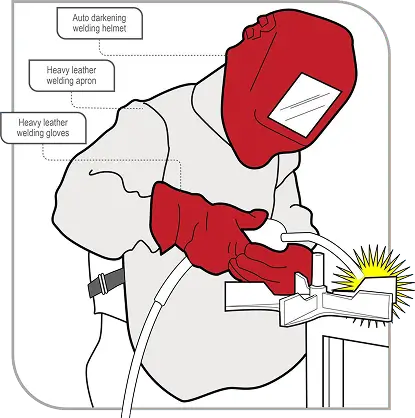
Figure 3 Worker wearing PPE while welding
When PPE is worn by workers, it should not introduce other hazards to the worker, such as musculoskeletal injuries, thermal discomfort, or reduced visual and hearing capacity.
The types of PPE recommended for use in welding are summarised in Table 2.
| PPE type | Hazards | Recommendation |
|---|---|---|
| Eyes, face and head protection (e.g. goggles, helmets, hand shields and protective filters) |
Eyes, face and head protection (e.g. goggles, helmets, hand shields and protective filters) |
Workers should always have their eyes, face and/or head protected whenever they are welding. For further information see: AS/NZS 1338: (set)1 Filters for eye protectors, AS/NZS 1338.1:2012: Filters for eye protectors - Filters for protection against radiation generated in welding and allied operations and AS/NZS 1336:2014: Eye and face protection—Guidelines and AS/NZS 1337.1:2010: Personal eye protection: Eye and face protectors for occupational applications. |
| Hearing protection (e.g. ear muffs and ear plugs) |
Hearing loss | Ear plugs or ear muffs may be required to minimise the risks of noise. For further information see: AS/NZS 1270:2002: Acoustics – Hearing protectors and AS/NZS 1269.3:2005: Occupational noise management – Hearing protector program. |
| Gloves/gauntlets | Heat, ultraviolet light and burns from hot debris and sparks | Gloves should be fire resistant and protect exposed skin on the hands and wrists. For further information see: AS/NZS 2161: (set)2 Occupational protective gloves. |
| Clothing (e.g. flame resistant long sleeved shirts, long trousers, aprons and leather spats) |
Heat, ultraviolet light and burns from hot debris and sparks |
Avoid clothing which has the potential to capture hot sparks and metals, for example in pockets or other folds. Clothing should be made of natural fibres. For further information see: AS/NZS 4502: (series) Methods for evaluating clothing for protection against heat and fire. |
| Foot protection (e.g. boots and shoes) |
Hot metal debris, other metal debris and electric shock |
Foot protection should be non-slip and be heat and fire resistant. Avoid using foot protection which has the potential to capture hot sparks and metal debris, for example in laces or in open style shoes. For further information see: AS/NZS 2210: (set)3 Occupational protective footwear and AS/NZS 2210.1:2010: Safety, protective and occupational footwear – Guide to selection, care and use. |
| Screens | Exposure to the rays of an arc during electric welding operations |
Opaque or appropriate translucent screens can be used to protect the health and safety of people within the vicinity of welding. For further information see: AS/NZS 3957:2014: Light-transmitting screens and curtains for welding operations. |
| Respiratory protective devices (face respirators and air supplied respirators) |
Dusts, hazardous fumes, gases and chemicals and oxygen depleted atmospheres |
Respirators should be fitted for each person individually and if one is to be used by another operator, it must be disinfected and refitted before use. The tightness of all connections and the condition of the face piece, headbands and valves should be checked before each use. Air supplied respirators may be required in some situations, for example confined spaces. For further information see: AS/NZS 1716:2012: Respiratory protective devices which should be selected in accordance with AS/NZS 1715:2009: Selection, use and maintenance of respiratory protective equipment. |
 Schedule Your Assessment Now