
 Products
Noise and Lead
Managing risk of hearing loss from noise
Audiometric testing

You must manage the risks to health and safety relating to hearing loss associated with noise. You must ensure that the noise a worker is exposed to at the workplace does not exceed the exposure standard for noise.
The exposure standard for noise regarding hearing loss, is defined in the WHS Regulations as an LAeq,8h of 85 dB(A) or an LC,peak of 140 dB(C). There are two parts to the exposure standard for noise because noise can either cause gradual hearing loss over a period of time or be so loud it causes immediate hearing loss.
Audiometric testing must be provided to a worker who is frequently required to use personal hearing protectors to protect the worker from the risk of hearing loss associated with noise that exceeds the exposure standard for noise.
Exposure to high noise levels can cause permanent hearing loss. Equipment for performing welding can generate varying levels and frequencies of noise which may cause workers to be exposed to noise which exceeds the exposure standard. Specifically plasma arc welding generally exceeds the noise levels generated by other welding activities and ranges between 98 and 112 dB(A).
Control measures to protect against noise
The most effective control measure is to eliminate the source of noise. If this is not possible:
− modify equipment and processes to reduce the noise
− isolate the source of noise from people by using distance, barriers, welding bays and sound absorbing
surfaces (types of engineering control measures)
− implement administrative control measures which limit the amount of noise people are exposed to and how long they are exposed to it, and
− personal hearing protection must be provided to protect workers from any remaining risk.
Further guidance about controlling noise in the workplace is available in the Code of Practice: Managing noise and preventing hearing loss at work.
LEAD
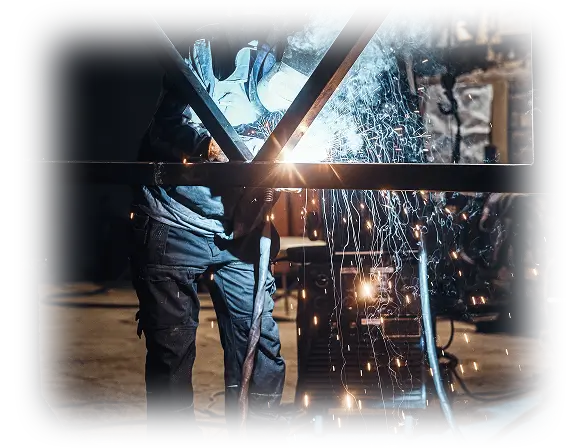
Lead is just one of the many heavy metals that pose a risk when welding metals using fluxes. Lead can become an airborne contaminant when soldering and welding materials. A welder may be exposed to lead when welding on steel painted with leaded paints, on leaded steel, flame cutting of batteries and materials contaminated with lead (for example old automotive mufflers).
The major risk associated with lead is lead poisoning (plumbism). This affects the blood system and can cause anaemia. Other symptoms include abdominal pain, convulsions, hallucinations, coma, weakness, tremors and the possible increased risk of cancer. Lead exposure can also affect both male and female reproductive systems. A developing foetus is particularly at risk, especially in the early weeks before a pregnancy becomes known.
Duty to give information about health risks of lead process
Under the WHS Regulations a lead process is defined as a process by which electric arc, oxyacetylene, oxy gas, plasma arc or a flame is applied for welding, cutting or cleaning, to the surface of metal coated with lead or paint containing more than one per cent by dry weight of lead metal.
This means certain requirements in the WHS Regulations apply, including identifying lead risk work and removing a worker from lead risk work in certain circumstances.
If you carry out lead processes, you must provide information about the lead process to:
− a person who is likely to carry out the lead process, before they are engaged, and
− a worker for the business or undertaking—before the worker commences the lead process.
If work is identified as lead risk work after a worker commences the work, you must give information about the lead process to the worker as soon as practicable after it is identified as lead risk work and before health monitoring of the worker is provided.
The information that must be given includes the health risks and toxic effects associated with exposure to lead. If the lead process involves lead risk work, information must also be given on the need for and details of health monitoring.
Control measures to protect against lead exposure
The WHS Regulations require you to:
− ensure so far as is reasonably practicable lead is confined to a lead process area at the workplace and the lead process area is kept clean
− ensure methods used to clean a lead process area do not create a risk to health of persons in the immediate vicinity or have the potential to spread the contamination of lead
− take all reasonable steps to ensure a person does not eat, drink, chew gum, smoke or carry materials used for smoking in a lead process area
− provide and maintain in good working order changing rooms, washing, showering and toilet facilities
− provide workers with an eating and drinking area that, so far as is reasonably practicable, cannot be contaminated with lead from a lead process, and
− ensure, so far as reasonably practicable, workers remove clothing and equipment which is or is likely to be contaminated with lead and wash their hands and faces before entering an eating or drinking area.
The WHS Regulations also specify control measures for the laundering, disposal and removal of PPE which is likely to be contaminated with lead dust.
There are also specific notification requirements under the WHS Regulations for notifying the regulator within 7 days of determining that lead risk work is being undertaken.
 Schedule Your Assessment Now