
 Products
Airborne Contaminants
Ensuring exposure standards for substances and mixtures not exceeded
As a person conducting a business or undertaking (PCBU), you must ensure that no person at the workplace is exposed to a substance or mixture in an airborne concentration that exceeds the exposure standard for the substance or mixture.
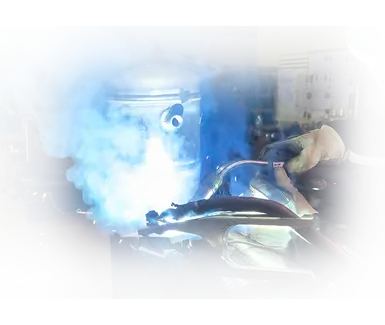
Welding can generate fumes, mists, dust, vapours and gases, including ozone. The amounts and types of fumes produced vary greatly depending on the process involved and the materials being used such as metals, solvents, flux, paint and plastics. The health effects of exposure to fumes, dust, vapour and gases can vary. Effects can include irritation of the upper respiratory tract (nose and throat), tightness in the chest, asphyxiation, asthma, wheezing, metal fume fever, lung damage, bronchitis, cancer, pneumonia or emphysema.
Some welding fumes are easy to see. However, many fumes, mists, dust, vapours and gases are invisible. Generally, fewer fumes are generated from gas welding than from electric welding processes. Also, intense ultraviolet radiation emitted by arcs may travel significant distances from arcs, especially in reflective environments, and may give rise to significant quantities of ozone. Appendix B contains information about fumes which are commonly released during welding.
To determine the risk of exposure to fumes during welding you should identify what equipment and materials are being used and the level of fumes, dust, vapour and gases generated. For example, phosphine is generated when steel which is coated with a rust-proofing compound is welded. High concentrations of phosphine gas are irritating to the eyes, nose and skin. The substance can have detrimental effects on the lungs and other organs. In order to prevent exposure to phosphine in this circumstance, you would first identify rust-proofed steel in the material to be welded.
For exposure to welding fumes, total fume concentrations as well as individual fume components should be considered.
Control measures for welding fumes, mists, dust, vapours and gases:
− eliminate, so far as is reasonably practicable, any exposure to welding fumes
− if it is not reasonably practicable to eliminate the risk, measures to minimise the risk must be used.
For example:
• substituting a hazardous chemical with a less hazardous one
• reducing the quantity of a hazardous chemical which is used, handled or stored at the workplace, for example removing surface contaminants before carrying out welding will reduce fumes (or airborne contaminants)
• isolating the source of exposure to the hazardous chemical, for example welding in isolation booths away from others, and
• using engineering control measures, for example installing ventilation systems to capture or remove airborne contaminants. See Chapter 4 Section 1 of this code for more information on ventilation.
− implement administrative control measures, for example procedures to handle hazardous chemicals safely, and
− provide appropriate respiratory protective equipment.
It is also good practice to reduce the quantity of a hazardous chemical which is used, handled or stored at the workplace where welding processes are carried out.
Check the welding rods’ SDS, if available, to identify which gases and fumes are released during welding. Further information about controlling airborne contaminants is available in the Fume Minimisation Guidelines published by the Welding Technology Institute of Australia.
Exposure standards
Exposure standards provide airborne concentrations of a particular substance or mixture which must not be exceeded. There are three types of exposure standard:
− 8-hour time-weighted average—the average airborne concentration of a particular substance permitted over an eight-hour working day and a 5-day working week
− peak limitation—a maximum or peak airborne concentration of a particular substance determined over the shortest analytically practicable period of time which does not exceed 15 minutes, and
− short term exposure limit—the time-weighted maximum average airborne concentration of a particular substance permitted over a 15-minute period.
Exposure standards are based on the airborne concentrations of individual substances which, according to current knowledge, should not cause adverse health effects nor cause undue discomfort to nearly all workers.
Chemicals with workplace exposure standards are listed in the Workplace exposure standards for airborne contaminants on the SWA website. Guidance on interpreting exposure standards is available in the Guidance on the interpretation of Workplace exposure standards for airborne contaminants.
Exposure standards are also available from the Hazardous Chemical Information System (HCIS) on the Safe Work Australia website. The HCIS database contains information and guidance for many substances. Although exposure standards may also be listed in Section 8 of the SDS, you should always check the Workplace exposure standards for airborne contaminants or HCIS to be certain of the mandatory value.
To comply with the WHS Regulations, monitoring of workplace contaminant levels for chemicals with exposure standards may need to be carried out.
 Schedule Your Assessment Now